The opposite of love is not hate, it's indifference. The opposite of beauty is not ugliness, it's indifference.
The opposite of faith is not heresy, it's indifference.
And the opposite of life is not death, but indifference between life and death.
-- Elie Wiesel (born 30 September 1928) is a writer, professor at Boston University, political activist, Nobel Laureate and Holocaust survivor. Author of Night.
Nov 20, 2011


Not Long Ago
You know, right after *9*1*1*, it was a proud time to be an American and we were bound by a sense of honor and unity. Patriotism was flying high. Where Were You When The World Stopped Turning.
It is hard to imagine that a lot of countries live in a perpetual state of war, famine, genocide, and corruption. We are Americans and America is Good, and Right, and 9*1*1 was terrible because it was on the shores of the privileged.
I believed it was out of my hands, and just waited for that Karma to kick in, baby. That's a pacifist for ya. And then somewhere along the line it dawned on me there are a lot of ways to fight for your country other than shouldering a gun, and I began to feel an incremental shift.
To hear God's voice, turn down life's volume
Randy tells a story about when he was a kid and playing out front with a friend. A man drove up in a car and somehow coaxed Randy's friend into it and then took off. Randy ran in to tell his dad and they jumped in their big old car and gave chase. They caught up with the man a few blocks down, his dad cut them off with his car, and then grabbed Randy's pal out of the car and took him home to relieved hugs, and a sound spanking.
We know how this story could have played out without the intervention. There are too many heartbreaking stories like this. But I am amazed by Randy's dad, who had only a split second to decide. What did his father teach his son, who rode shotgun with eyes scanning the road for the car? What did Randy learn about being a man and protecting the weak in the face of wrongdoing?
Everybody's got a choice: to wait and see how it turns out; to learn, protect our own interests, and act on it; to battle the powers that be with our vote and our voice; to move elsewhere; or to jump in and take action.
It is what it is.
Not long ago, we were embracing strangers on the street and prayed in neighborhood churches on 9*11*2001. And all of these shenanigans were already going on behind the scenes.
Not long ago, the roots of our country were forged in violent protest and defiance of the illegal manipulation and taxation of its citizens and control of their money and earnings. We had to fight to be free of England's tyrrany.
If our 401K wasn't looted and our house wasn't seized, and we don't have an empty fridge, does that make it any less of our problem?
It is hard to imagine that a lot of countries live in a perpetual state of war, famine, genocide, and corruption. We are Americans and America is Good, and Right, and 9*1*1 was terrible because it was on the shores of the privileged.
I believed it was out of my hands, and just waited for that Karma to kick in, baby. That's a pacifist for ya. And then somewhere along the line it dawned on me there are a lot of ways to fight for your country other than shouldering a gun, and I began to feel an incremental shift.
To hear God's voice, turn down life's volume
Randy tells a story about when he was a kid and playing out front with a friend. A man drove up in a car and somehow coaxed Randy's friend into it and then took off. Randy ran in to tell his dad and they jumped in their big old car and gave chase. They caught up with the man a few blocks down, his dad cut them off with his car, and then grabbed Randy's pal out of the car and took him home to relieved hugs, and a sound spanking.
We know how this story could have played out without the intervention. There are too many heartbreaking stories like this. But I am amazed by Randy's dad, who had only a split second to decide. What did his father teach his son, who rode shotgun with eyes scanning the road for the car? What did Randy learn about being a man and protecting the weak in the face of wrongdoing?
Everybody's got a choice: to wait and see how it turns out; to learn, protect our own interests, and act on it; to battle the powers that be with our vote and our voice; to move elsewhere; or to jump in and take action.
It is what it is.
Not long ago, we were embracing strangers on the street and prayed in neighborhood churches on 9*11*2001. And all of these shenanigans were already going on behind the scenes.
Not long ago, the roots of our country were forged in violent protest and defiance of the illegal manipulation and taxation of its citizens and control of their money and earnings. We had to fight to be free of England's tyrrany.
If our 401K wasn't looted and our house wasn't seized, and we don't have an empty fridge, does that make it any less of our problem?
Nov 19, 2011
What Percentage Are We, Really?
This thought-provoking article was written by Brian Watson from Finance Weekly.
Political positions were, for a time, a matter of color: Republican were red, Democrats were blue, and nonpartisans and centrists -- when they could be found -- might claim purple. But since the Great Recession, percentages, not pigments, are becoming America's great dividers. With conservatives and liberals alike defining themselves and others as the 99%, the 1%, the 53%, the 47%, and various other percentages, it's time to ask just what these numbers mean -- and where the average American family fits in.
When it comes to dividing up our class structure, the middle is a good place to start -- namely, the 60% of households wedged between the poorest 20% and the richest 20%. These families make between $20,001 and $100,065 a year, and were the group hardest hit by the recession: In 2008, their average income fell by 3.6%, the biggest single-year drop in history. At the same time, they were also devastated by rising unemployment, mass foreclosures, soaring tuitions and frozen wages. By comparison, households below the 20% line often qualify for social welfare programs, were far less likely to own real estate, and were less affected by massive layoffs. In other words, they had less to lose, and ended up losing less.
On the other end of the spectrum, many of those above the 80% line were shielded from the harsher effects of economic downturns. And over the last 30 years, the top 20% have done quite well: Their share of all wages paid in the U.S. has gone from 50% to 60%. Everyone else has lost ground.
The 99% vs. the 1%
Members of the Occupy Wall Street movement and their allies don't think this is the best way of looking at America's households: The big dividing line in their view is the 99th percentile. In this country, they assert, there are the top 1% of households, and everyone else.
There's something to be said for Occupy Wall Street's math. As President Obama discovered when he suggested lowering the qualification line for the top tax rate to $250,000, where we place the dividing line between "the rich" and "everyone else" is highly controversial. But moving the wealth line from $100,065 to $1.1 million -- the boundary for the top 1% -- avoids the argument about who exactly is middle class fairly neatly. No matter where your political sympathies lie, it's hard to call millionaires middle class.
And the top 1% have done exceptionally well over the last 30 years: They receive 17% of all wages paid in the U.S -- more than twice the percentage they received 30 years ago. Meanwhile, the bottom 80% of households lost 9% of their income share in the same period, and now receive about 47% of all wages paid. Put simply, the richest 1% gained all the wages the rest of the country lost.
The 53% vs. the 47%
The dividing line between the 99% and the 1% is stark, but some argue there's a better one: The boundary between those who pay income taxes and those who don't. According to the nonpartisan Tax Policy Center, 53% of households pay federal income tax; the rest either break even or get back more in refunds than they pay.
In fact, the second-to-lowest 20% of the country -- households making between $20,001 and $38,043 -- get back about 0.4% more income tax than they pay; for families who make less than $20,000, it's about 6.8%.
In fact, when everything is factored in, 86% of the country pays more than it gets back in federal taxes. As for the rest, it's not the split you might expect: More than half (8% of Americans) are senior citizens receiving Social Security.
And that last 6% -- the ones who really pay nothing to the federal government? They are unemployed, disabled, in school, or making very low incomes. But even this small group pays state and local taxes, sales taxes, and other government fees.
Where the Poor Pay More
When it comes to percentage of income, the line is even clearer: For some taxes, the bottom 20% of the Americans pay more than the top 20%. For example, a household on the bottom pays almost 54% more of its income into Social Security than a household on the top. The same goes for excise taxes -- fees attached to certain commodities like gasoline and alcohol: As a percentage of income, the poorest 20% pays more than four times as much as the richest 20%.
So where is the ultimate dividing line? The answer might have less to do with money than with the way we perceive it: In a recent poll, The Hill found that 66% of likely voters believe that the middle class is shrinking, and 55% believe that income inequality has become a big problem for the country. Surprisingly, worries about income inequality were higher among those who are doing better: 65% of respondents in the top 20% felt that income inequality was a big or somewhat big problem.
In other words, when it comes to the economy, worrying about the future may be the one thing that cuts across all class lines.
Political positions were, for a time, a matter of color: Republican were red, Democrats were blue, and nonpartisans and centrists -- when they could be found -- might claim purple. But since the Great Recession, percentages, not pigments, are becoming America's great dividers. With conservatives and liberals alike defining themselves and others as the 99%, the 1%, the 53%, the 47%, and various other percentages, it's time to ask just what these numbers mean -- and where the average American family fits in.
When it comes to dividing up our class structure, the middle is a good place to start -- namely, the 60% of households wedged between the poorest 20% and the richest 20%. These families make between $20,001 and $100,065 a year, and were the group hardest hit by the recession: In 2008, their average income fell by 3.6%, the biggest single-year drop in history. At the same time, they were also devastated by rising unemployment, mass foreclosures, soaring tuitions and frozen wages. By comparison, households below the 20% line often qualify for social welfare programs, were far less likely to own real estate, and were less affected by massive layoffs. In other words, they had less to lose, and ended up losing less.
On the other end of the spectrum, many of those above the 80% line were shielded from the harsher effects of economic downturns. And over the last 30 years, the top 20% have done quite well: Their share of all wages paid in the U.S. has gone from 50% to 60%. Everyone else has lost ground.
The 99% vs. the 1%
Members of the Occupy Wall Street movement and their allies don't think this is the best way of looking at America's households: The big dividing line in their view is the 99th percentile. In this country, they assert, there are the top 1% of households, and everyone else.
There's something to be said for Occupy Wall Street's math. As President Obama discovered when he suggested lowering the qualification line for the top tax rate to $250,000, where we place the dividing line between "the rich" and "everyone else" is highly controversial. But moving the wealth line from $100,065 to $1.1 million -- the boundary for the top 1% -- avoids the argument about who exactly is middle class fairly neatly. No matter where your political sympathies lie, it's hard to call millionaires middle class.
And the top 1% have done exceptionally well over the last 30 years: They receive 17% of all wages paid in the U.S -- more than twice the percentage they received 30 years ago. Meanwhile, the bottom 80% of households lost 9% of their income share in the same period, and now receive about 47% of all wages paid. Put simply, the richest 1% gained all the wages the rest of the country lost.
The 53% vs. the 47%
The dividing line between the 99% and the 1% is stark, but some argue there's a better one: The boundary between those who pay income taxes and those who don't. According to the nonpartisan Tax Policy Center, 53% of households pay federal income tax; the rest either break even or get back more in refunds than they pay.
In fact, the second-to-lowest 20% of the country -- households making between $20,001 and $38,043 -- get back about 0.4% more income tax than they pay; for families who make less than $20,000, it's about 6.8%.
In fact, when everything is factored in, 86% of the country pays more than it gets back in federal taxes. As for the rest, it's not the split you might expect: More than half (8% of Americans) are senior citizens receiving Social Security.
And that last 6% -- the ones who really pay nothing to the federal government? They are unemployed, disabled, in school, or making very low incomes. But even this small group pays state and local taxes, sales taxes, and other government fees.
Where the Poor Pay More
When it comes to percentage of income, the line is even clearer: For some taxes, the bottom 20% of the Americans pay more than the top 20%. For example, a household on the bottom pays almost 54% more of its income into Social Security than a household on the top. The same goes for excise taxes -- fees attached to certain commodities like gasoline and alcohol: As a percentage of income, the poorest 20% pays more than four times as much as the richest 20%.
So where is the ultimate dividing line? The answer might have less to do with money than with the way we perceive it: In a recent poll, The Hill found that 66% of likely voters believe that the middle class is shrinking, and 55% believe that income inequality has become a big problem for the country. Surprisingly, worries about income inequality were higher among those who are doing better: 65% of respondents in the top 20% felt that income inequality was a big or somewhat big problem.
In other words, when it comes to the economy, worrying about the future may be the one thing that cuts across all class lines.
Nov 18, 2011
The First of Many
 NEW YORK (CNNMoney) -- A Nevada grand jury has indicted two people allegedly involved in a "massive" robo-signing scheme, the state's attorney general said Thursday.
 A spokeswoman for Attorney General Catherine Cortez Masto said she believed the indictments represent the first criminal charges filed in association with robo-signing, or the falsification of foreclosure documents.
Robo-signing is believed to have been responsible for thousands of wrongful foreclosures nationwide in the past few years.
According to the attorney general's office, two California residents, Gary Trafford and Gerri Sheppard, face dozens of charges for allegedly supervising the falsification of thousands of foreclosure documents in Nevada between 2005 and 2008, as the housing bubble hit its peak.
Trafford and Sheppard worked during that period for mortgage servicing firm Lender Processing Services (LPS). LPS has also been subpoenaed by attorneys general in California and Illinois in connection with alleged robo-signing.
"The grand jury found probable cause that there was a robo-signing scheme which resulted in the filing of tens of thousands of fraudulent documents," Nevada Deputy Attorney General John Kelleher said in a statement. A defense lawyer in the case did not immediately return calls seeking comment.
Lender Processing Services processes loans for more than 50% of all U.S. mortgages, the Illinois attorney general's office said in May.
In a statement issued Thursday, LPS, which said it has more than 8,000 employees, acknowledged that the signing procedures on some of its mortgage documents were "flawed." But it added that its documents were "properly authorized" and did not result in any wrongful foreclosures.
The spokeswoman for the Nevada attorney general declined to comment on whether there were any plans to expand the investigation or seek more indictments.
Nov 12, 2011
All Better
Today was an adventure through and through. It was our first dog attended obedience class, and the six dogs and their pets spent about 75 minutes learning how to live by the same rules. It was really interesting and fun.
Sam is extremely polite except for the jumping straight up like she's on a spring thing. She loooooves children and other pets and, well, pretty much everybody and everything all the time. And she listens pretty well and isn't fussy and sleeps in her crate happily and loves her dog run. She did get after the jacket Rman just bought, chewed off the size tag and the sales tag, but it was in a bag on the floor of the bedroom and the door forgot to get closed. Bad owner. Bad owner.
We have been noticing Sam won't go to the bathroom when we are away from home. On daily walks around the block she never potties. They are fairly short walks these days so we thought maybe it was that - 20-30 minutes she can hold. Why does she think dogs behave in this way? She sniffs those who have gone before. At the dog park she sees other dogs doing their business but she has totally completely not caught on. We show her our doggy dropping bags at the ready.
So today when we headed up north to try and find snow, we figured she would finally go away from home. It had snowed mid week and so we thought just above Auburn we might encounter some, but it was dry. So we kept driving a while, thinking Sam would potty somewhere along the route. No dice. We were gone for hours, and made sure to stop a couple of times to give her ample time, but she spent it on adventures with squirrels and meeting children and sniffing really interesting things. And you know, the little runt held it until she got home. We wonder how it's going to go when we go camping.
Anyway, we left Sam on her extended potty break and went to dinner in Vacaville and afterwards stopped off for a bit of shopping before settling in for the night. And at Home Goods my purse was stolen right out from under our nose! We were standing right there, and it was sitting in the cart. To be honest, it took a while to realize it was gone, and another bit of time to retrace our steps back and forth, assuming I put it down absent mindedly. It had to be there. And then of course we checked the car (did I even bring it in with me?) and called the restaurant (maybe it's under my chair?) before it sunk in.
It really was gone, and conversations with the store manager and Vacaville PD followed, and we headed home dejectedly. I was disappointed that I wasn't more aware of what was going on around me. Disappointed that someone leaned into my world and took something that was important. And bummer for the thief because I never carry cash or check books or anything of value. I was carrying our beloved digital camera, though, and that was probably long gone.
We thought it might be tossed in a trash can somewhere and so checked a few trash cans just for good measure before giving up. The Vacaville PD and store manager were so wonderful, it nearly made me weep. They said they would check surveillance cameras at the store, and here was the police file number if it turned up. Not to worry, but call on those cards tonight. I told them I fully expected it to turn up, and that sounded good even if I was a bit skeptical.
We got home and pulled out all our info in the safe to begin making calls to the banks and credit fraud services. This was going to be a really big pain in the neck! I was checking off what to do: well, there's the new driver's license to get, and bank cards, Costco and Health Club and all of those little necessary cards like AAA and medical and the grocery store.
What all is in my purse? I didn't know for sure. Keys, wallet, lip gloss, pens, and a writing tablet; oh, and those little touching mementos like the 1879 silver dollar from Rman after our first date, and the $2 bill for good measure and the $5 euro from our honeymoon. The flipper keyring. I kept trying to wrap my head around the fact someone out there had my credit cards, id and insurance info all together. Oh, man.
And then the phone rang. It was Tammy from Winters who had been shopping in the same shopping center and found my purse laying in the parking lot as they left Old Navy. She said it had been gone through and was all messy but it looked pretty much intact. She googled my name and found the number that way.
I couldn't believe it. Keys? Yes. Bank cards, yes, three of them, and the driver's license. Digital camera and silver dollar? No, sorry. But she lived close by, and we just got home from meeting up and offering a reward which she was too gracious to accept. (But she did accept a hug.)
Now here we are all sacked in for the night with the sound of the heater humming away. What an awesome adventure day. Thank God it's over!
Sam is extremely polite except for the jumping straight up like she's on a spring thing. She loooooves children and other pets and, well, pretty much everybody and everything all the time. And she listens pretty well and isn't fussy and sleeps in her crate happily and loves her dog run. She did get after the jacket Rman just bought, chewed off the size tag and the sales tag, but it was in a bag on the floor of the bedroom and the door forgot to get closed. Bad owner. Bad owner.
We have been noticing Sam won't go to the bathroom when we are away from home. On daily walks around the block she never potties. They are fairly short walks these days so we thought maybe it was that - 20-30 minutes she can hold. Why does she think dogs behave in this way? She sniffs those who have gone before. At the dog park she sees other dogs doing their business but she has totally completely not caught on. We show her our doggy dropping bags at the ready.
So today when we headed up north to try and find snow, we figured she would finally go away from home. It had snowed mid week and so we thought just above Auburn we might encounter some, but it was dry. So we kept driving a while, thinking Sam would potty somewhere along the route. No dice. We were gone for hours, and made sure to stop a couple of times to give her ample time, but she spent it on adventures with squirrels and meeting children and sniffing really interesting things. And you know, the little runt held it until she got home. We wonder how it's going to go when we go camping.
Anyway, we left Sam on her extended potty break and went to dinner in Vacaville and afterwards stopped off for a bit of shopping before settling in for the night. And at Home Goods my purse was stolen right out from under our nose! We were standing right there, and it was sitting in the cart. To be honest, it took a while to realize it was gone, and another bit of time to retrace our steps back and forth, assuming I put it down absent mindedly. It had to be there. And then of course we checked the car (did I even bring it in with me?) and called the restaurant (maybe it's under my chair?) before it sunk in.
It really was gone, and conversations with the store manager and Vacaville PD followed, and we headed home dejectedly. I was disappointed that I wasn't more aware of what was going on around me. Disappointed that someone leaned into my world and took something that was important. And bummer for the thief because I never carry cash or check books or anything of value. I was carrying our beloved digital camera, though, and that was probably long gone.
We thought it might be tossed in a trash can somewhere and so checked a few trash cans just for good measure before giving up. The Vacaville PD and store manager were so wonderful, it nearly made me weep. They said they would check surveillance cameras at the store, and here was the police file number if it turned up. Not to worry, but call on those cards tonight. I told them I fully expected it to turn up, and that sounded good even if I was a bit skeptical.
We got home and pulled out all our info in the safe to begin making calls to the banks and credit fraud services. This was going to be a really big pain in the neck! I was checking off what to do: well, there's the new driver's license to get, and bank cards, Costco and Health Club and all of those little necessary cards like AAA and medical and the grocery store.
What all is in my purse? I didn't know for sure. Keys, wallet, lip gloss, pens, and a writing tablet; oh, and those little touching mementos like the 1879 silver dollar from Rman after our first date, and the $2 bill for good measure and the $5 euro from our honeymoon. The flipper keyring. I kept trying to wrap my head around the fact someone out there had my credit cards, id and insurance info all together. Oh, man.
And then the phone rang. It was Tammy from Winters who had been shopping in the same shopping center and found my purse laying in the parking lot as they left Old Navy. She said it had been gone through and was all messy but it looked pretty much intact. She googled my name and found the number that way.
I couldn't believe it. Keys? Yes. Bank cards, yes, three of them, and the driver's license. Digital camera and silver dollar? No, sorry. But she lived close by, and we just got home from meeting up and offering a reward which she was too gracious to accept. (But she did accept a hug.)
Now here we are all sacked in for the night with the sound of the heater humming away. What an awesome adventure day. Thank God it's over!
Nov 8, 2011
Something for Nothing
In conversations recently, Socialism seemed to be the dirty throw-around word and I'm glad about that.
I have always believed that Socialism and Capitalism are separate governing models, but can co-exist within the same model. A dab of socialism is visible in all of the Western European countries and throughout the world, including here.
Wikipedia defines socialism as "a social and economic system in which the economic means of production are owned and controlled collectively by the people. Since the blue collar workers "do all the work", socialists suggest that they should get an equal share of the wealth. A true socialist society would have no private property rights and goods produced in it would be distributed among the citizens--from each according to his ability, to each according to his need."
Obviously we have reigned in the full impact of socialism. Ours is a long-standing *successfully functioning* capitalistic model, so it's hard to measure how the effect of some socialistic elements affect it long term. But there's no doubt the allure is in its organizational power to effect change for a large number of people.
FDR's New Deal and Social Security counter-measures to the Great Depression were socialistic: government supported programs to put people back to work, and establish social security and welfare for a better quality of life. Had it actually been the short term solutions they were intended to be, I am sure Roosevelt would be even more highly regarded than he is.
Socialism is the basis of any government-run anything for the greater good that is paid for by the people. And with us taxed and taxed and taxed some more, we know how the government is doling out all these freebies. It is at work behind unemployment and SSID payments, established retirement ages and guaranteed retirement income for government workers, public schools, Medicare and centralized banking. Overwhelmingly those things have hugely improved America, although not all of us benefit directly. Come to expect them, even.
I was remembering a comment made from my hero, Thomas Jefferson, who vehemently opposed centralized banking. He warned about its inevitable manipulation and corruption and the potential of it to bring this country down.
We definitely live in a remarkable time. We have Greece as an example of what becomes of a country without sustainable revenue to support its popular and socialistic programs of guaranteed retirement age, healthcare and income. They implemented a lifestyle without enough sustainable income to pay the debt. Sound familiar?
I wonder if the decline of personal drive and achievement in America is due to the socialism we embrace, as charged, or perhaps just due to poor Leadership. Our country has botched imports/exports to the extent our companies must leave the country to remain competitive on our own shores. Our national import policy is a disgrace. We do not demand the competing imports the same tariffs as they charge us when our goods are exported there, which essentially gives them the home court advantage. It is indefensible that our leaders do not promote our own goods and services in a free society so reliant that income for our economic health.
Powerful socialistic unions now tell the government how to manage its own workers. We are criticized for a workforce that is less educated and less motivated than ever before. Are we really a less educated workforce or just unwilling to reconnect with our capitalistic roots of hard work and self sacrifice?
One thing is certain. By and large, we have lost faith that the government is willing to protect us from the monsters they have created in the banking / real estate / and healthcare industries. A pit bull without teeth isn't much of a watchdog.
The role of government expands and contracts with each Administration. But we put into office people who reflect the things we want, socialistic dole-outs included. How does it work when we all agree that something must be done, but nobody wants to give anything up?
Capitalism is hard. There are winners and losers. Not everybody gets a trophy at the end of the season. But in a free market there are still ground-rules.
Like we are proud that capitalism is the voluntary exchange of goods and services for the mutual benefit of both parties. And that makes it vulnerable to fraud because profit is its measure of winning and losing. It is for the good of our governing model to call out those who rig the outcome. (I pulled this paragraph off the Occupy Wall Street website, by the way.)
What we have is a situation where our financial institutions and Wall Street power brokers have rigged the results with real estate holdings, stock market investments, and long term savings. So I ask you ... if they steal the win, what does that make us?
I have always believed that Socialism and Capitalism are separate governing models, but can co-exist within the same model. A dab of socialism is visible in all of the Western European countries and throughout the world, including here.
Wikipedia defines socialism as "a social and economic system in which the economic means of production are owned and controlled collectively by the people. Since the blue collar workers "do all the work", socialists suggest that they should get an equal share of the wealth. A true socialist society would have no private property rights and goods produced in it would be distributed among the citizens--from each according to his ability, to each according to his need."
Obviously we have reigned in the full impact of socialism. Ours is a long-standing *successfully functioning* capitalistic model, so it's hard to measure how the effect of some socialistic elements affect it long term. But there's no doubt the allure is in its organizational power to effect change for a large number of people.
FDR's New Deal and Social Security counter-measures to the Great Depression were socialistic: government supported programs to put people back to work, and establish social security and welfare for a better quality of life. Had it actually been the short term solutions they were intended to be, I am sure Roosevelt would be even more highly regarded than he is.
Socialism is the basis of any government-run anything for the greater good that is paid for by the people. And with us taxed and taxed and taxed some more, we know how the government is doling out all these freebies. It is at work behind unemployment and SSID payments, established retirement ages and guaranteed retirement income for government workers, public schools, Medicare and centralized banking. Overwhelmingly those things have hugely improved America, although not all of us benefit directly. Come to expect them, even.
I was remembering a comment made from my hero, Thomas Jefferson, who vehemently opposed centralized banking. He warned about its inevitable manipulation and corruption and the potential of it to bring this country down.
We definitely live in a remarkable time. We have Greece as an example of what becomes of a country without sustainable revenue to support its popular and socialistic programs of guaranteed retirement age, healthcare and income. They implemented a lifestyle without enough sustainable income to pay the debt. Sound familiar?
I wonder if the decline of personal drive and achievement in America is due to the socialism we embrace, as charged, or perhaps just due to poor Leadership. Our country has botched imports/exports to the extent our companies must leave the country to remain competitive on our own shores. Our national import policy is a disgrace. We do not demand the competing imports the same tariffs as they charge us when our goods are exported there, which essentially gives them the home court advantage. It is indefensible that our leaders do not promote our own goods and services in a free society so reliant that income for our economic health.
Powerful socialistic unions now tell the government how to manage its own workers. We are criticized for a workforce that is less educated and less motivated than ever before. Are we really a less educated workforce or just unwilling to reconnect with our capitalistic roots of hard work and self sacrifice?
One thing is certain. By and large, we have lost faith that the government is willing to protect us from the monsters they have created in the banking / real estate / and healthcare industries. A pit bull without teeth isn't much of a watchdog.
The role of government expands and contracts with each Administration. But we put into office people who reflect the things we want, socialistic dole-outs included. How does it work when we all agree that something must be done, but nobody wants to give anything up?
Capitalism is hard. There are winners and losers. Not everybody gets a trophy at the end of the season. But in a free market there are still ground-rules.
Like we are proud that capitalism is the voluntary exchange of goods and services for the mutual benefit of both parties. And that makes it vulnerable to fraud because profit is its measure of winning and losing. It is for the good of our governing model to call out those who rig the outcome. (I pulled this paragraph off the Occupy Wall Street website, by the way.)
What we have is a situation where our financial institutions and Wall Street power brokers have rigged the results with real estate holdings, stock market investments, and long term savings. So I ask you ... if they steal the win, what does that make us?
Nov 6, 2011
What Matters Most
This is the dilemma: what to do; what to believe; how to understand; how to strategize; when to hold on and when to move on.
Fiscally speaking, I have always followed the rules and been reasonably frugal, like most of my friends. Spent a lifetime trusting the appraisals and lenders and real estate agents that I was making a sound investment. Bought 5 homes and sold 3 by owner, with fair and equitable results. You don't get rich that way, but you do sleep at night.
I have been downsized as part of an aging workforce and upsized, too. I have known what it is like to send out hundreds of resumes and receive no replies. I have lain awake at night imagining retirement without more time to save for it. And felt the gratefulness and relief of reporting for work.
There are too many that have to look at a pile of bills today and know not all of them can be paid. Who will endure those kinds of calls from creditors. Who will sit at the bank, hat in hand, never having made a late payment until now, and getting turned down for a little help with the payments just until they get back on their feet. As if the banks have forgotten what went before. As if playing by the rules didn't matter.
As I write this, there are people who are selling what they can and packing up the rest, and waiting for the knock on the door and a 3-day vacate notice. And when it comes, in silence they will leave the keys on the counter and close up their home with nowhere to go.
We have to take care of this. Of each other. Of those who caused this to happen. Because if we do not, nothing else will matter.
Fiscally speaking, I have always followed the rules and been reasonably frugal, like most of my friends. Spent a lifetime trusting the appraisals and lenders and real estate agents that I was making a sound investment. Bought 5 homes and sold 3 by owner, with fair and equitable results. You don't get rich that way, but you do sleep at night.
I have been downsized as part of an aging workforce and upsized, too. I have known what it is like to send out hundreds of resumes and receive no replies. I have lain awake at night imagining retirement without more time to save for it. And felt the gratefulness and relief of reporting for work.
There are too many that have to look at a pile of bills today and know not all of them can be paid. Who will endure those kinds of calls from creditors. Who will sit at the bank, hat in hand, never having made a late payment until now, and getting turned down for a little help with the payments just until they get back on their feet. As if the banks have forgotten what went before. As if playing by the rules didn't matter.
As I write this, there are people who are selling what they can and packing up the rest, and waiting for the knock on the door and a 3-day vacate notice. And when it comes, in silence they will leave the keys on the counter and close up their home with nowhere to go.
We have to take care of this. Of each other. Of those who caused this to happen. Because if we do not, nothing else will matter.
Nov 5, 2011
Sophocles was one smart dude
"Heaven ne'er helps the men who will not act." (Sophocles)
And so it is with this quote that I begin a reply to another favorite ancient (:) whose posts are impassioned and reflective. The topic de jour is the Occupy Wall Street movement sweeping the world and more specifically those who have settled near her home in Boston. The occupiers make life inconvenient with snarled traffic and loitering; she has traversed the buses and streets via wheelchair and is exploring their platform and motivations. I am very interested in her opportunity to see first-hand what is going on. And yet, and yet ...
In every movement, there are those whose motivations are not in sync with the movement itself. Kind of the 'And ANOTHER thing' mentality. When a voice has been silent too long, everything that seems unfair about our free enterprise system tumbles out and can diffuse the message they want to convey. I once participated in a sit-in at my high school for better food to be served in the cafeteria. I didn't actually eat in the cafeteria, but it was a sit in and I wanted to miss class.
I have been studying our economy in the last couple of years, and I am sorry to say not much before that. Wall street, leveraging substandard commodities, the subprime mess, the foreclosure fiasco and what is behind it comes down to ~ profit at all costs. My fundamental conclusion is about the way people become powerful and stay powerful, and that is: through any means possible.
There is no honor in the hallowed halls of business and finance. There is no American patriotism or ethical frameworks to reign them in. Justice is not blind to money and power. Our financial structure is a calculated machine designed to extract every ounce of revenue regardless of what is best for our country and its people.
You might recognize this philosophical business model from the Middle East. What a thorn in our side it has been to grapple with Oil Cartels and embargos through the 20th century. Gas was .35 a gallon when I began to drive, and the same product today costs 3.85. Why? Because oil rich countries have enslaved countries like ours. They call the shots, monopolize the market, and set the price to ensure outrageous profits. It has been argued that we have a choice to use foreign oil or not. I agree: we have a choice, even in America that snubs public transit as a poor substitute for the freedom and independence of a car. Our country is too lazy to develop alternative energy sources that would be in the best interests of the planet and the country, and that is a choice.
But when you start screwing with the economic stability and basic top 3 of the working class (food housing shelter), and you try to apply the cartel model, all bets are off.
Let's put it this way: For any American citizen to intentionally set out to skim unearned profits that will destabilize the country's financial foundations is a reprehensible act. There were warning signs, and yet the risky behavior continued along this course, using their position and wealth to control and circumvent the legal system. There is plenty of evidence that even after the collapse had begun, the business model continued to squeeze every last profit via fraud and deceit.
So I ask you: which was a more direct hit to our financial strength and national durability ~ the Twin Towers or Bank/Wall Street's calculated attack on the American people? That's what I think, too. This in every way was an act of 'domestic' Treason.
Oran's Dictionary of the Law (1983) defines treason as "...[a]...citizen's actions to help a foreign government overthrow, make war against, or seriously injure the [parent nation]."
In its simplest form, Americans want/need/demand accountability for those unethical and fraudulent business practices by the ruling class. It is not a matter of envy at all: it is in horror and astonishment that people want a sluggish and confused Political body to DO SOMETHING. We the People believe the same rules should apply to the Wall Street and Big Bank Cartels as it would be if we stole our neighbor's car, credit cards and milk cow.
It is unfathomable that those with more money and toys than they know what to do with felt the compulsion to steal from those who cannot defend themselves. The evidence proves these same looters continue to steal our homes, our livelihoods, and our future.
I agree that greed and arrogance will be judged when they stand before God. But for now, all we really want is for the hemmorage to stop.
And so it is with this quote that I begin a reply to another favorite ancient (:) whose posts are impassioned and reflective. The topic de jour is the Occupy Wall Street movement sweeping the world and more specifically those who have settled near her home in Boston. The occupiers make life inconvenient with snarled traffic and loitering; she has traversed the buses and streets via wheelchair and is exploring their platform and motivations. I am very interested in her opportunity to see first-hand what is going on. And yet, and yet ...
In every movement, there are those whose motivations are not in sync with the movement itself. Kind of the 'And ANOTHER thing' mentality. When a voice has been silent too long, everything that seems unfair about our free enterprise system tumbles out and can diffuse the message they want to convey. I once participated in a sit-in at my high school for better food to be served in the cafeteria. I didn't actually eat in the cafeteria, but it was a sit in and I wanted to miss class.
I have been studying our economy in the last couple of years, and I am sorry to say not much before that. Wall street, leveraging substandard commodities, the subprime mess, the foreclosure fiasco and what is behind it comes down to ~ profit at all costs. My fundamental conclusion is about the way people become powerful and stay powerful, and that is: through any means possible.
There is no honor in the hallowed halls of business and finance. There is no American patriotism or ethical frameworks to reign them in. Justice is not blind to money and power. Our financial structure is a calculated machine designed to extract every ounce of revenue regardless of what is best for our country and its people.
You might recognize this philosophical business model from the Middle East. What a thorn in our side it has been to grapple with Oil Cartels and embargos through the 20th century. Gas was .35 a gallon when I began to drive, and the same product today costs 3.85. Why? Because oil rich countries have enslaved countries like ours. They call the shots, monopolize the market, and set the price to ensure outrageous profits. It has been argued that we have a choice to use foreign oil or not. I agree: we have a choice, even in America that snubs public transit as a poor substitute for the freedom and independence of a car. Our country is too lazy to develop alternative energy sources that would be in the best interests of the planet and the country, and that is a choice.
But when you start screwing with the economic stability and basic top 3 of the working class (food housing shelter), and you try to apply the cartel model, all bets are off.
Let's put it this way: For any American citizen to intentionally set out to skim unearned profits that will destabilize the country's financial foundations is a reprehensible act. There were warning signs, and yet the risky behavior continued along this course, using their position and wealth to control and circumvent the legal system. There is plenty of evidence that even after the collapse had begun, the business model continued to squeeze every last profit via fraud and deceit.
So I ask you: which was a more direct hit to our financial strength and national durability ~ the Twin Towers or Bank/Wall Street's calculated attack on the American people? That's what I think, too. This in every way was an act of 'domestic' Treason.
Oran's Dictionary of the Law (1983) defines treason as "...[a]...citizen's actions to help a foreign government overthrow, make war against, or seriously injure the [parent nation]."
In its simplest form, Americans want/need/demand accountability for those unethical and fraudulent business practices by the ruling class. It is not a matter of envy at all: it is in horror and astonishment that people want a sluggish and confused Political body to DO SOMETHING. We the People believe the same rules should apply to the Wall Street and Big Bank Cartels as it would be if we stole our neighbor's car, credit cards and milk cow.
It is unfathomable that those with more money and toys than they know what to do with felt the compulsion to steal from those who cannot defend themselves. The evidence proves these same looters continue to steal our homes, our livelihoods, and our future.
I agree that greed and arrogance will be judged when they stand before God. But for now, all we really want is for the hemmorage to stop.
Just Sayin'
A Bug's Life is coming to mind this morning. It is an animated cartoon and parable about conflict and resolution against an impossibly powerful adversary.
Flik is the ant; Hopper is the head grasshopper and Bully; Princess Atta is the neurotic Queen-in-Training.
For as long as anyone remembers, the ants have gathered enough food for the grasshoppers and the Colony. When the story opens, Flik has just been cast out for his innovative ideas, one of which backfired so badly that the entire winter food stockpiles were lost in the lake.
The ant colony is frantic to gather enough food for themselves and the grasshoppers before they return for it, and Hopper has given them a grim ultimatim that if it is not ready he will squish the Queen.
The ants realize there is not enough food left to pick even if they had the time. If they give the grasshoppers all that is left the Colony will starve.
Prior to the grasshopper's return, a few of Hopper's underlings suggest they head somewhere warm and not return to the Colony at all. Hopper drowns the dissenting grasshoppers in a pile of seeds, with this reply...
Hopper: "You let one ant stand up to us, then they all might stand up! Those puny little ants outnumber us a hundred to one and if they ever figure that out there goes our way of life! It's not about food, it's about keeping those ants in line. That's why we're going back! Does anybody else wanna stay?"
And when the grasshoppers return, there is a big showdown between Flik and Hopper.
Hopper: "Let this be a lesson to all you ants! Ideas are very dangerous things! You are mindless, soil-shoving losers, put on this Earth to serve us!"
Flik:" You're wrong, Hopper. Ants are not meant to serve grasshoppers. I've seen these ants do great things, and year after year they somehow manage to pick food for themselves *and* you. So-so who is the weaker species? Ants don't serve grasshoppers! It's *you* who need *us*! We're a lot stronger than you say we are... And you know it, don't you?"
Soon, everyone climbs onboard.
Princess Atta: "You see Hopper, Nature has a certain order. The ants pick the food, the ants keep the food, and the grasshoppers leave!"
Just because it's always been that way doesn't mean it ought to be. Just sayin'.
Flik is the ant; Hopper is the head grasshopper and Bully; Princess Atta is the neurotic Queen-in-Training.
For as long as anyone remembers, the ants have gathered enough food for the grasshoppers and the Colony. When the story opens, Flik has just been cast out for his innovative ideas, one of which backfired so badly that the entire winter food stockpiles were lost in the lake.
The ant colony is frantic to gather enough food for themselves and the grasshoppers before they return for it, and Hopper has given them a grim ultimatim that if it is not ready he will squish the Queen.
The ants realize there is not enough food left to pick even if they had the time. If they give the grasshoppers all that is left the Colony will starve.
Prior to the grasshopper's return, a few of Hopper's underlings suggest they head somewhere warm and not return to the Colony at all. Hopper drowns the dissenting grasshoppers in a pile of seeds, with this reply...
Hopper: "You let one ant stand up to us, then they all might stand up! Those puny little ants outnumber us a hundred to one and if they ever figure that out there goes our way of life! It's not about food, it's about keeping those ants in line. That's why we're going back! Does anybody else wanna stay?"
And when the grasshoppers return, there is a big showdown between Flik and Hopper.
Hopper: "Let this be a lesson to all you ants! Ideas are very dangerous things! You are mindless, soil-shoving losers, put on this Earth to serve us!"
Flik:" You're wrong, Hopper. Ants are not meant to serve grasshoppers. I've seen these ants do great things, and year after year they somehow manage to pick food for themselves *and* you. So-so who is the weaker species? Ants don't serve grasshoppers! It's *you* who need *us*! We're a lot stronger than you say we are... And you know it, don't you?"
Soon, everyone climbs onboard.
Princess Atta: "You see Hopper, Nature has a certain order. The ants pick the food, the ants keep the food, and the grasshoppers leave!"
Just because it's always been that way doesn't mean it ought to be. Just sayin'.
Nov 4, 2011
Subject to Change
A King in his castle must have been sitting around one day and thinking, how can I increase my power over the Court? Life is no fun at all without risk and competition.
So the King called in his advisors and commanded them to come up with a way to achieve that. The advisors hatched a plan and the King liked it. He had all the money and power he needed already, but this would be fun.
They found a Peasant and brought him to the castle. They fed and fattened him up, bathed and cut his hair, shaved his beard and put him in fine clothes. They taught him courtly manners and introduced him to the Privileged. Who would recognize a Commoner presented by the King himself?
No one. The Peasant in all his finery and plumage was an instant hit! Not only that, he showed wisdom beyond his years, and in time it slipped the King's mind that he ever was a Lowly. He looked and behaved like a Privileged, and the King favored him as a trusted advisor.
Years passed. The Peasant became rich beyond his wildest imaginations. In time he forgot who he was. And when a beautiful maiden in the Court fell in love with him, a jubilant wedding and a houseful of children followed. In time, their fine sons grew to manhood and each took a wife and had children.
Life was going pretty well for the Commoner. One day his fine sons were to be Knighted, and as part of the ceremony the royal lineage was traced. And there it was discovered that he was not Royalty at all. He was just a Peasant! The Privileged had invested in him, trusted and given him their children to marry, all that they had, dowrys and money, and he was unworthy!
 They were outraged! The King was in a tight spot. And so he proclaimed the law of the land was death for such an act and ordered the family slaughtered for mixing Commoner blood with Royal blood. Among those murdered were the children and grandchildren begot of the union, which included the beloved family members of the Privileged, plus the King's advisors.
The Court was in ruins. News spread from kingdom to kingdom, and soon Courts everywhere began to rise up with one voice for accountability and change. The King ended up with no one to lead. The End.
(Ironically, this is my 99th post for 2011.)
So the King called in his advisors and commanded them to come up with a way to achieve that. The advisors hatched a plan and the King liked it. He had all the money and power he needed already, but this would be fun.
They found a Peasant and brought him to the castle. They fed and fattened him up, bathed and cut his hair, shaved his beard and put him in fine clothes. They taught him courtly manners and introduced him to the Privileged. Who would recognize a Commoner presented by the King himself?
No one. The Peasant in all his finery and plumage was an instant hit! Not only that, he showed wisdom beyond his years, and in time it slipped the King's mind that he ever was a Lowly. He looked and behaved like a Privileged, and the King favored him as a trusted advisor.
Years passed. The Peasant became rich beyond his wildest imaginations. In time he forgot who he was. And when a beautiful maiden in the Court fell in love with him, a jubilant wedding and a houseful of children followed. In time, their fine sons grew to manhood and each took a wife and had children.
Life was going pretty well for the Commoner. One day his fine sons were to be Knighted, and as part of the ceremony the royal lineage was traced. And there it was discovered that he was not Royalty at all. He was just a Peasant! The Privileged had invested in him, trusted and given him their children to marry, all that they had, dowrys and money, and he was unworthy!
 They were outraged! The King was in a tight spot. And so he proclaimed the law of the land was death for such an act and ordered the family slaughtered for mixing Commoner blood with Royal blood. Among those murdered were the children and grandchildren begot of the union, which included the beloved family members of the Privileged, plus the King's advisors.
 The Court was in ruins. News spread from kingdom to kingdom, and soon Courts everywhere began to rise up with one voice for accountability and change. The King ended up with no one to lead. The End.
(Ironically, this is my 99th post for 2011.)
Nov 1, 2011


Rock On
2011 is a dance between Immunity and Vulnerability. So much bad news, so much negativity, so many worries; So much beauty, astonishing things to learn and do, so much gratefulness.
Bad news has its first response of compassion, followed by outreach and prayerful energy for healing, and then maybe a slide-in wrap-up prayer of thanksgiving for ourselves. (Until one day I realized the selfishness in that, as in: thank you for *it* not happening to me.)
So now with listening ears on, I hear the desperateness in our voices; the search for dissimilarities (rather than similarities) to be insulated from harm; and the struggle to make better choices for ourselves before it is too late.
For those growing up with the same values and opportunities, living the same dream, eating the same food, breathing the same air, playing the same games, learning from the same books - how is it one can develop cancer and one not? One become a big business CEO and one not? One change the world and one not? One slide through the rough times and one not?
Good questions to figure out. Rock on.
Bad news has its first response of compassion, followed by outreach and prayerful energy for healing, and then maybe a slide-in wrap-up prayer of thanksgiving for ourselves. (Until one day I realized the selfishness in that, as in: thank you for *it* not happening to me.)
So now with listening ears on, I hear the desperateness in our voices; the search for dissimilarities (rather than similarities) to be insulated from harm; and the struggle to make better choices for ourselves before it is too late.
For those growing up with the same values and opportunities, living the same dream, eating the same food, breathing the same air, playing the same games, learning from the same books - how is it one can develop cancer and one not? One become a big business CEO and one not? One change the world and one not? One slide through the rough times and one not?
Good questions to figure out. Rock on.
Please Just Verify Your Information
It's been a toss up whether to keep the landline now that almost everybody uses cell phones, but so far we're sticking with it.
But I wonder whether we should be. We've been getting calls for the last couple of weeks, from a call center who is identifying itself as BofA. Of course at first you think it's legitimate. We sometimes get a fraud alert call if they are monitoring our credit card.
The first few calls went something like this:
Call Center: Hello Mr xxx (mispronounced). This is BofA. We have important information about your account, but first we would like to verify your mailing address.
R: Do you realize it is 8:30 at night? Why is my bank calling at 8:30 at night?
CC: We are technically allowed to call until 9:00 pm, Sir.
R: Is this a solicitation call? A credit fraud alert call?
CC: We cannot discuss the purpose of the call until you verify your information.
R: I will not verify my address with you. My bank already knows my address.
CC: Sir, this is an important call regarding your account.
R: I am in good standing with BofA. What is the purpose of the call?
CC: If we can only verify --
R: I am on a Do Not Call list for Solicitation. You are legally not supposed to be calling.
CC: We have the legal right to call.
R: On what grounds?
CC: This is regarding your account.
R: How do I know this is BofA.
CC: You can return the call to verify at 1-800-669-0102.
R: How about we call the customer service number on the back of my BofA card instead?
R: Better yet, let's take a little field trip to the internet, shall we? (sounds of typing)
R: Well looky there. 1-800-669-0102, is that correct?
CC: Yes.
R: There are a lot of links to that number online: Fraud. Fraud. Fraud. Fraud. Fraud.
CC: I assure you we are legitimate.
R: But you have no information for the account you are discussing. And you are unwilling to tell me the purpose of the call without asking for secure information over the phone. How does that make you legitimate?
CC: Sir, don't get upset. You shouldn't be taking this personally.
R: (much cursing, and hanging up)
Indeed. What is more personal than protecting our financial reputation?
Since this all came up, we took a trip to the bank, called the 800 call center, lodged a complaint with the online fraud department to sympathetic listeners. The real BofA is totally aware. And just for fun we even called that number they gave us over the phone to see what would happen, and do you know what? The automated answerer said they would be happy to connect you to a representative as soon as you ... verify some personal information.
Unfortunately this scenario has been repeated once or twice a day since.
'Hi, I'm from BofA.' Sometimes we just laugh before hanging up. Sometimes we hash it out with them again and again and Einstein comes to mind when we do:
The callers have different dialects and accents, men and women, day and night, a continuous stream of calls. Our response varies from being (a lot more) heated to (a lot more) calm, but they are not deterred.
Last night's call involved a new tack: we told him we had closed all accounts and moved our money out of BofA because of the harassing calls.
'Will you take us off your call list now?' was the burning question.
And the reply? 'No, Sir. Not until you verify the information.'
Maybe it's time to ditch the landline after all.
http://tinypundit.blogspot.com/2009/05/bank-of-america-or-tele-scam-800-669.html
But I wonder whether we should be. We've been getting calls for the last couple of weeks, from a call center who is identifying itself as BofA. Of course at first you think it's legitimate. We sometimes get a fraud alert call if they are monitoring our credit card.
The first few calls went something like this:
Call Center: Hello Mr xxx (mispronounced). This is BofA. We have important information about your account, but first we would like to verify your mailing address.
R: Do you realize it is 8:30 at night? Why is my bank calling at 8:30 at night?
CC: We are technically allowed to call until 9:00 pm, Sir.
R: Is this a solicitation call? A credit fraud alert call?
CC: We cannot discuss the purpose of the call until you verify your information.
R: I will not verify my address with you. My bank already knows my address.
CC: Sir, this is an important call regarding your account.
R: I am in good standing with BofA. What is the purpose of the call?
CC: If we can only verify --
R: I am on a Do Not Call list for Solicitation. You are legally not supposed to be calling.
CC: We have the legal right to call.
R: On what grounds?
CC: This is regarding your account.
R: How do I know this is BofA.
CC: You can return the call to verify at 1-800-669-0102.
R: How about we call the customer service number on the back of my BofA card instead?
R: Better yet, let's take a little field trip to the internet, shall we? (sounds of typing)
R: Well looky there. 1-800-669-0102, is that correct?
CC: Yes.
R: There are a lot of links to that number online: Fraud. Fraud. Fraud. Fraud. Fraud.
CC: I assure you we are legitimate.
R: But you have no information for the account you are discussing. And you are unwilling to tell me the purpose of the call without asking for secure information over the phone. How does that make you legitimate?
CC: Sir, don't get upset. You shouldn't be taking this personally.
R: (much cursing, and hanging up)
Indeed. What is more personal than protecting our financial reputation?
Since this all came up, we took a trip to the bank, called the 800 call center, lodged a complaint with the online fraud department to sympathetic listeners. The real BofA is totally aware. And just for fun we even called that number they gave us over the phone to see what would happen, and do you know what? The automated answerer said they would be happy to connect you to a representative as soon as you ... verify some personal information.
Unfortunately this scenario has been repeated once or twice a day since.
'Hi, I'm from BofA.' Sometimes we just laugh before hanging up. Sometimes we hash it out with them again and again and Einstein comes to mind when we do:
Insanity: Doing the same thing over and over again and expecting different results.
The callers have different dialects and accents, men and women, day and night, a continuous stream of calls. Our response varies from being (a lot more) heated to (a lot more) calm, but they are not deterred.
Last night's call involved a new tack: we told him we had closed all accounts and moved our money out of BofA because of the harassing calls.
'Will you take us off your call list now?' was the burning question.
And the reply? 'No, Sir. Not until you verify the information.'
Maybe it's time to ditch the landline after all.
http://tinypundit.blogspot.com/2009/05/bank-of-america-or-tele-scam-800-669.html
Oct 30, 2011
82 Big Ones
We celebrated Pop B's birthday yesterday. Talk about being completely in the dark! (For a half hour or so, anyway, the restaurant had no power.) The place was jammed with people. So we decided to get in on the food in the buffet line while we still could.
Armed with a cell phone lighting up chinese and japanese food, which looks weird even with the lights on, we kind of leaned forward and peered into the steam trays and sort of poked at it with a spoon. What do you think? pork? chicken? tofu? Still in the dark, we brought our plates back to the table and dug in. I am pretty sure I just ate some jellyfish.
Pop wasn't feeling very well even before that. He'd had a recent trip to the hospital, poor guy, but once the lights came back on we sang happy bday which cheered him up, and spending time with the guys is always a treat. It's never quite the same, he says, if anyone is missing, and with life and distance commitments inevitably there is someone with a conflict. I think we've only had 100% attendance (sons + wives + grandkids) a couple of times.
It was a beautiful day in The City: mild, warm, clear, and sunny. Pop headed home and a few of us went down to the beach and met up with some Sunset District people in an atrium and talked over a live band. We walked to the beach and laughed away the day hearing new stories.
Nice weekend. Pop's 82nd. I'll bet he's had plenty of afternoons like the one we just enjoyed, hanging with friends in the sun. I'm glad about that.
Armed with a cell phone lighting up chinese and japanese food, which looks weird even with the lights on, we kind of leaned forward and peered into the steam trays and sort of poked at it with a spoon. What do you think? pork? chicken? tofu? Still in the dark, we brought our plates back to the table and dug in. I am pretty sure I just ate some jellyfish.
Pop wasn't feeling very well even before that. He'd had a recent trip to the hospital, poor guy, but once the lights came back on we sang happy bday which cheered him up, and spending time with the guys is always a treat. It's never quite the same, he says, if anyone is missing, and with life and distance commitments inevitably there is someone with a conflict. I think we've only had 100% attendance (sons + wives + grandkids) a couple of times.
It was a beautiful day in The City: mild, warm, clear, and sunny. Pop headed home and a few of us went down to the beach and met up with some Sunset District people in an atrium and talked over a live band. We walked to the beach and laughed away the day hearing new stories.
Nice weekend. Pop's 82nd. I'll bet he's had plenty of afternoons like the one we just enjoyed, hanging with friends in the sun. I'm glad about that.

Oct 27, 2011
The Best Kind of Day
 |
| This is what the bone sees as it is handed over to a happy puppy |
It's a routine that works for us.
What also works for us is to typically leave the sliding door ajar so she can come in and out as needed. It prevents accidents in the house and gives her freedom of movement to find her favorite toys wherever they were left.
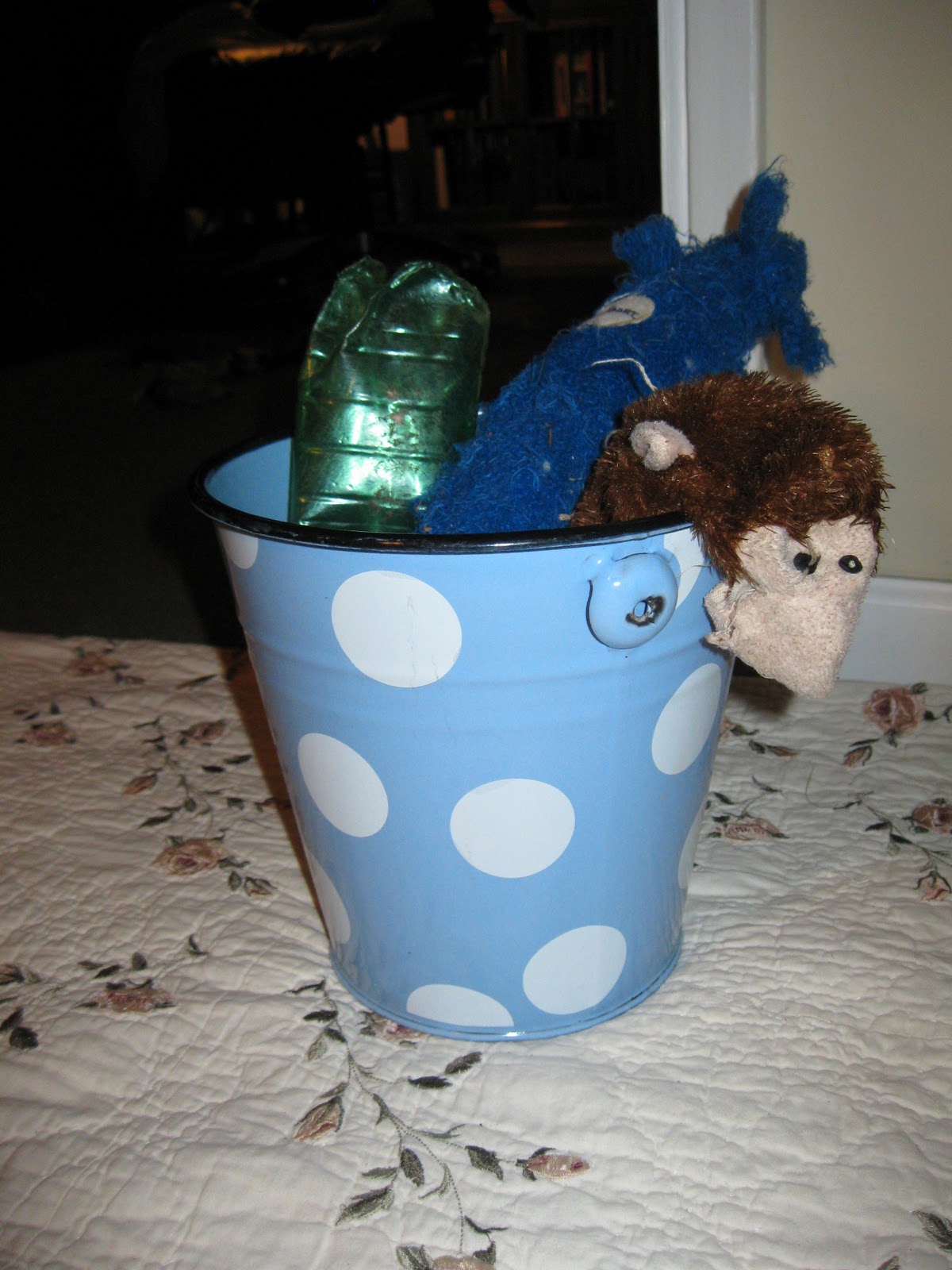
The other morning Sam was coming in and out of the house as usual, bringing me treasures she found from the far East and far West of the yard. A snail. A piece of rebar. A mangy sprinkler head caked in dirt. A slimy ball. A piece of plastic sheeting for weeds. A rock.
And her last trip in was a gallop. I heard her coming before I saw her, which was unfortunate when she rounded the bend excitedly. She was covered in mud. All four paws up to her middle, and most of her underside. Carpet and Flooring and Puppies, Oh My.
 So lickety split we headed out on a search for the source of the mud. She found a tiny patch of mud just on the other side of the concrete pad where the air conditioner drips. 4"x6". Cover and hide, and then off for a bath and the carpet shampooer.
 Mud for little anythings makes for the best kind of day.
All of the Above
You know what they say about working by committee: it takes twice as long to get half as much done, and nobody's happy.
Big families know this axiom. The bigger the family, the more likely someone will slack off. There are the doers who always step up, and the others who always step back, relieved, and let them do it all.
But when the stakes are high, does it make sense for only one or two to know what is going on and tell the others - and dredge up all that family dynamic that forms two camps of thought on what to do ... and inevitably forces it to come down to a simple majority vote?
It was different in my family. Everyone had a role: caregiver, logistics, health coordinator. You need a tree removed during Thanksgiving dinner or sprinklers repaired or a blind put up? Got it. You want someone to cook and read to you? Simultaneously? Done.
When my mom didn't understand what was going on and I needed help, I picked up the phone. My brother was surprised by the call (after all, he is a logistics man), but he turned the car around and headed right up. At first I thought that being in a small family meant there is nowhere to hide.
But now I realize it is more about being in tune with the people we care for. Don knew Mom better than anyone else and her preferences, too, even when she could no longer articulate them. He had already asked and answered the burning question we all contemplate as nurturers and caregivers:
Big families know this axiom. The bigger the family, the more likely someone will slack off. There are the doers who always step up, and the others who always step back, relieved, and let them do it all.
But when the stakes are high, does it make sense for only one or two to know what is going on and tell the others - and dredge up all that family dynamic that forms two camps of thought on what to do ... and inevitably forces it to come down to a simple majority vote?
It was different in my family. Everyone had a role: caregiver, logistics, health coordinator. You need a tree removed during Thanksgiving dinner or sprinklers repaired or a blind put up? Got it. You want someone to cook and read to you? Simultaneously? Done.
When my mom didn't understand what was going on and I needed help, I picked up the phone. My brother was surprised by the call (after all, he is a logistics man), but he turned the car around and headed right up. At first I thought that being in a small family meant there is nowhere to hide.
But now I realize it is more about being in tune with the people we care for. Don knew Mom better than anyone else and her preferences, too, even when she could no longer articulate them. He had already asked and answered the burning question we all contemplate as nurturers and caregivers:
If it were me in that bed,
what would I want?
what would I want?
Oct 14, 2011
the Present moment
I have had the pleasure of coming to know a volunteer who is Japanese. She was raised just outside of Tokyo, and family still resides there, although she has been in the United States now for several years.
Her beautiful face and quick smile came to us because her husband is working for a Japanese car manufacturer and has been assigned to California for three years. She is raising their four year old son and with him in preschool she wanted something productive to do.
She is eminently patient when she meets someone new and is asked over and over about the earthquake and Tsunami and how her family fared. She is hard working, respectful to the task and thorough. There is a quiet gratefulness to sitting down to a meal together or approaching a task that is hard to define.
On this day, I learned about her Nuclear family, what the economy is like for young people there, (same as here, no work) and what it is like to be a mother of a completely bilingual son. I shared news of our family, and the enormous bounty of that. She immediately asked if we were Catholic ~ !! Some of us are, but mostly I would categorize us as abundant.
I also learned of her degree in Pharmacology and attending a school in Portland, OR, for several years. She liked the weather there until moving to Davis where there is more sun. At lunch yesterday, my niece was volunteering and very interested in her schooling, being in school herself in the same field. You should have seen the volunteer's face when Sara started asking the questions in fluent Japanese.
It was incredibly fun watching the two of them talk and tell jokes half in English and half in Japanese. It super-charged the day, made the tasks fly by, and we parted in smiles. I think my favorite part of daily life is the potential for every moment to have surprises tucked inside.
Her beautiful face and quick smile came to us because her husband is working for a Japanese car manufacturer and has been assigned to California for three years. She is raising their four year old son and with him in preschool she wanted something productive to do.
She is eminently patient when she meets someone new and is asked over and over about the earthquake and Tsunami and how her family fared. She is hard working, respectful to the task and thorough. There is a quiet gratefulness to sitting down to a meal together or approaching a task that is hard to define.
On this day, I learned about her Nuclear family, what the economy is like for young people there, (same as here, no work) and what it is like to be a mother of a completely bilingual son. I shared news of our family, and the enormous bounty of that. She immediately asked if we were Catholic ~ !! Some of us are, but mostly I would categorize us as abundant.
I also learned of her degree in Pharmacology and attending a school in Portland, OR, for several years. She liked the weather there until moving to Davis where there is more sun. At lunch yesterday, my niece was volunteering and very interested in her schooling, being in school herself in the same field. You should have seen the volunteer's face when Sara started asking the questions in fluent Japanese.
It was incredibly fun watching the two of them talk and tell jokes half in English and half in Japanese. It super-charged the day, made the tasks fly by, and we parted in smiles. I think my favorite part of daily life is the potential for every moment to have surprises tucked inside.
Oct 13, 2011
Down the Hatch
Post 470. Wow.
So the newest attempt to Do Something to rebuff the news of the Scale is this: Body by Vi. It's the one thing I thought I'd never do ~ a beverage to substitute a meal once or twice a day.
It was on the table when I got home last night, and so today proper is the first day of the nutritional adaptation, not wanting to bring bad karma on the attempt. Healthier Living - Visalus Science - is supposed to help boost metabolism through a balance of vitamins and minerals, burn fat, control hunger, clean my kitchen, and wash the dog.
 This morning I assembled a cup of milk, 2 scoops of powder, 1 cup of frozen fresh berries, and wahlah: an incredibly delicious 12 ounces of milkshakish numminess that I ate with a spoon. Remember when you are making a cake and have mixed the batter a hundred times and just poured it into the pan and there's some left in the bowl and you greedily lick it off the spatula? It tastes like that. With fruit.
There's all these other choices, too - health flavor mix ins if you want to try them - or supplements that target a healthy heart, circulation and complexion. But my needs are simple at this point. And anyway, I'm holding out for the apple pie flavor by combining the powder with milk, a small apple, some cinnamon and 4 ice cubes.
So the newest attempt to Do Something to rebuff the news of the Scale is this: Body by Vi. It's the one thing I thought I'd never do ~ a beverage to substitute a meal once or twice a day.
It was on the table when I got home last night, and so today proper is the first day of the nutritional adaptation, not wanting to bring bad karma on the attempt. Healthier Living - Visalus Science - is supposed to help boost metabolism through a balance of vitamins and minerals, burn fat, control hunger, clean my kitchen, and wash the dog.

There's all these other choices, too - health flavor mix ins if you want to try them - or supplements that target a healthy heart, circulation and complexion. But my needs are simple at this point. And anyway, I'm holding out for the apple pie flavor by combining the powder with milk, a small apple, some cinnamon and 4 ice cubes.
Oct 11, 2011
More Than Ever Before
It sometimes feels like I'm in a campy old movie in a cardboard car smiling out and moving the plastic steering wheel while the background whizzes by.
It has been said that keeping your childlike innocence helps to see the world through that permanent lens. I suppose it's true. I was given a heaping scoop of that sort of thing. It is hereditary. On my father's side.
 During the dark ages, it was my dad who worried that I would lose that sense of innocence. For years, it seemed lost. But something interesting happened, after things settled down. After the days and years ticked by and I wondered if this is how it would be, a peripheral world of solitude. After a friend once charged that I must not like myself well enough to be alone. I realized I am companionable by nature and unsatisfied with a solitary life.
The boys were growing into their own lives and action was required to change the circumstance of my life. A chance. A risk. But where to start. Gradually my heart felt strong and possible. There was awkwardness with the untried skills and times I didn't recognize myself as I pressed on. I learned to live with being out of my element. I had a plan.
My inner circle was not happy. Some worried and wrung their hands; some sent spies to report back to the hive. Some acted like they celebrated the process but did not; some quit calling. But there were those who wrapped me up and said ... do not stray too far and lose your way. We are waiting when you return. They never said not to go.
 It took a while of exploring and getting turned around before I recognized something. It was sunning itself on a rock, patiently waiting. I know you! I scooped up myjoyful innocence and danced and laughed and cried for the first time in way too long, and put it away in my heart.
I look back now and wonder if it was tucked around a 250 lb half German half Italian who has lit up my life or just a coincidence in timing. Maybe it was the clarity of being able to look at life with hopefulness again and finding the newness in normal everyday things.
It has been said that keeping your childlike innocence helps to see the world through that permanent lens. I suppose it's true. I was given a heaping scoop of that sort of thing. It is hereditary. On my father's side.
 During the dark ages, it was my dad who worried that I would lose that sense of innocence. For years, it seemed lost. But something interesting happened, after things settled down. After the days and years ticked by and I wondered if this is how it would be, a peripheral world of solitude. After a friend once charged that I must not like myself well enough to be alone. I realized I am companionable by nature and unsatisfied with a solitary life.
 The boys were growing into their own lives and action was required to change the circumstance of my life. A chance. A risk. But where to start. Gradually my heart felt strong and possible. There was awkwardness with the untried skills and times I didn't recognize myself as I pressed on. I learned to live with being out of my element. I had a plan.
My inner circle was not happy. Some worried and wrung their hands; some sent spies to report back to the hive. Some acted like they celebrated the process but did not; some quit calling. But there were those who wrapped me up and said ... do not stray too far and lose your way. We are waiting when you return. They never said not to go.
 It took a while of exploring and getting turned around before I recognized something. It was sunning itself on a rock, patiently waiting. I know you! I scooped up myjoyful innocence and danced and laughed and cried for the first time in way too long, and put it away in my heart.
 I look back now and wonder if it was tucked around a 250 lb half German half Italian who has lit up my life or just a coincidence in timing. Maybe it was the clarity of being able to look at life with hopefulness again and finding the newness in normal everyday things.
All I know for sure is that life has balance now, and grit and laughter and love. And I am myself more than ever before.
Subscribe to:
Posts (Atom)